OVERVIEW
Led a complete UX redesign of a document submission flow for mortgage applicants. Discovered that receiving multiple documents at once created cognitive overload, leading to high error rates. Solution: Progressive disclosure through conversational interface.
Client: Cred Imob | Duration: 2022-2024 | Services: UX Research, Conversational Design, Product Implementation
THE PROBLEM
Real issue: Customers received 2-9 PDF documents via chatbot with all instructions provided simultaneously, causing:
❌ Document Confusion: Users didn't know which to complete first
❌ High Error Rates: 35% submitted incomplete or incorrectly filled forms
❌ Support Burden: Each failed submission created additional support tickets
❌ Poor Completion Rates: 28% abandonment before submission
RESEARCH METHODOLOGY
🔍 Phase 1: Quantitative Analysis
Analyzed data from ~3,000 customers over 3-month period
Tracked: Churn rate, retry attempts, abandonment, submission errors
Finding: Cognitive overload = primary failure factor
🔍 Phase 2: Qualitative Research
Customer interviews about frustration points
Support ticket analysis for common confusion patterns
Discovered: Sequential guidance > bulk document delivery
🔍 Phase 3: Journey Mapping
Visualized entire mortgage document submission process
Identified 5 critical drop-off points
Validated hypotheses with usability testing
KEY FINDINGS
• Excesso de Informação (Information Overload): All documents + instructions at once created decision paralysis
• Lack of Progress Indicators: Users didn't know where they were in the process
• Personalization Gap: Same flow for different customer types (different document sets)
• Error Cascades: One mistake meant restarting entire process
SOLUTION: PROGRESSIVE DISCLOSURE
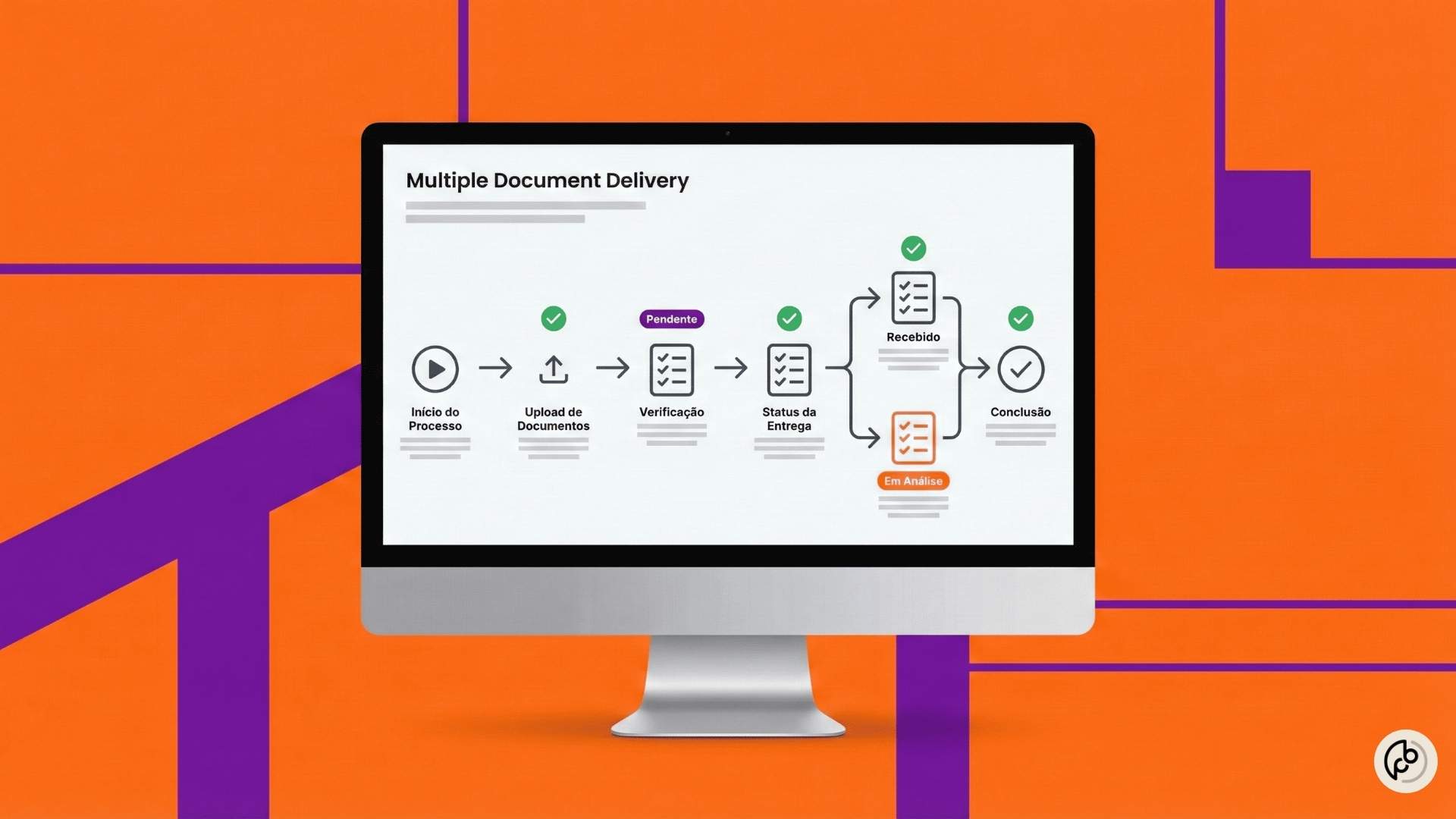
Redesigned flow to deliver documents sequentially via chatbot:
BEFORE (Bulk):
User receives 7 documents + 1 long instruction set at once
Confusion → errors → support tickets → manual resolution
AFTER (Progressive):
Chatbot asks: "What type of financing are you applying for?"
System determines document count & type
Delivers documents ONE AT A TIME with specific instructions
Progress indicator: "Document 3 of 7"
Visual step-by-step guidance (icons, clear CTAs)
Conditional follow-up questions
Confirmation before next document
IMPLEMENTATION ROADMAP
✓ Tool: Figma (interaction design)
✓ Platform: Blip conversational platform
✓ Backend: C# (conditional document routing)
✓ Testing: Piloted with 500 users before full rollout
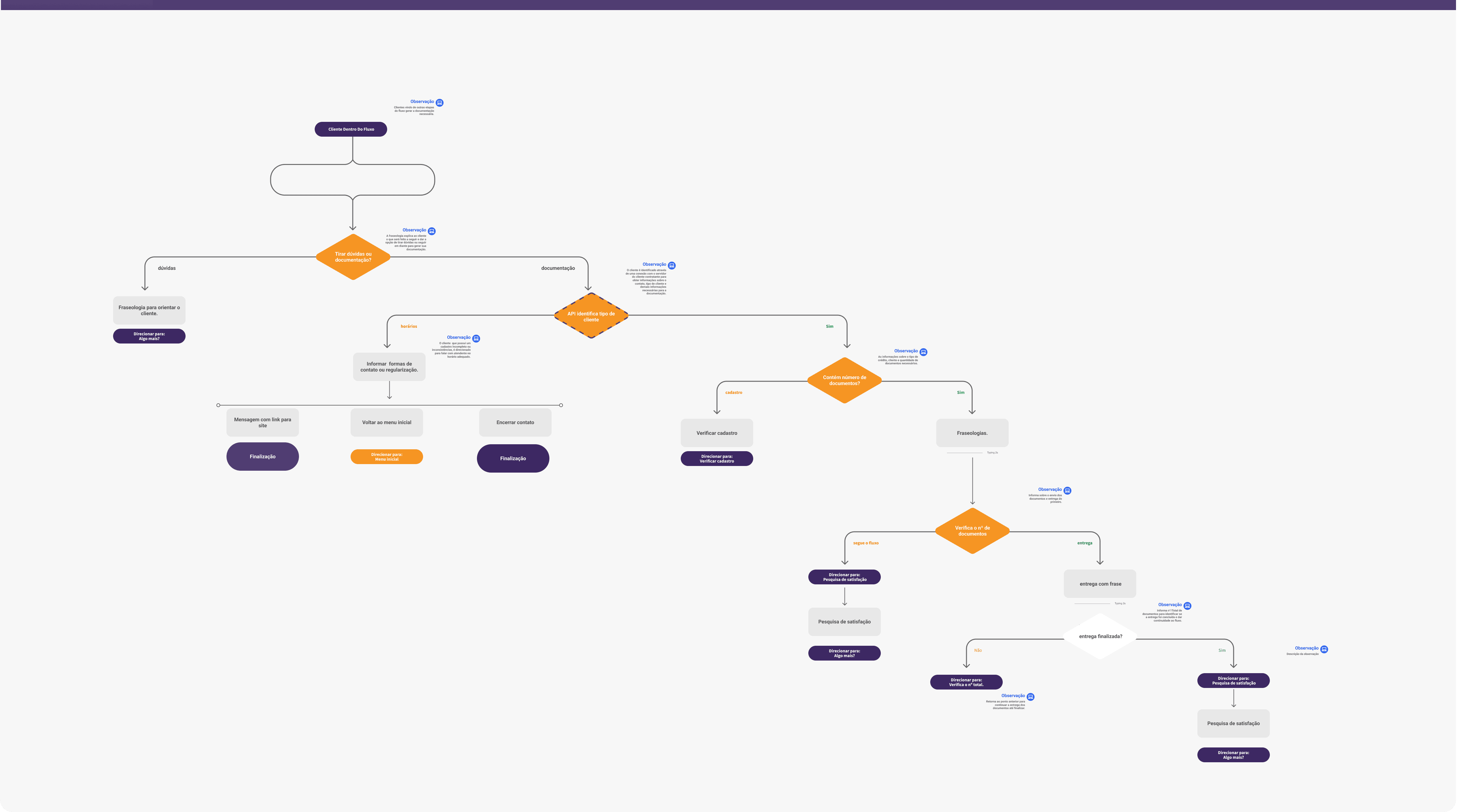
CONVERSATIONAL FLOW ARCHITECTURE
• Smart Personalization: Different flows based on customer segment
• Empathetic Messaging: UX copy addressing pain points
• Clear CTAs: "Continue to Next Document" vs. ambiguous buttons
• Error Recovery: Built-in validation, helpful error messages
• Accessibility: WCAG 2.1 AA compliance, screen-reader tested
RESULTS & IMPACT
📊 User Satisfaction: ↑12% (Net Promoter Score improvement)
❌ Error Reduction: ↓25% (from 35% to 10% error rate)
⏱️ Process Efficiency: ↓32% (average completion time)
💰 Cost Savings: Reduced support tickets by 40%
✅ Completion Rate: Improved from 72% to 94%
BEFORE vs. AFTER METRICS
Metric | Before | After | Improvement
Error Rate | 35% | 10% | ↓25%
Avg. Completion Time | 45 min | 31 min | ↓32%
Abandonment Rate | 28% | 6% | ↓22%
Support Escalations | 2,100/mo| 1,260/mo| ↓40%
User Satisfaction | 68 NPS | 76 NPS | ↑8 points
DESIGN PRINCIPLES APPLIED
✓ Cognitive Load Theory: Breaking complexity into manageable chunks
✓ Progressive Disclosure: Show information when needed
✓ Error Prevention: Validation at each step
✓ Accessibility: Inclusive design from the start
✓ Data-Driven UX: Decisions backed by research, not assumptions
MY ROLE
• Led qualitative & quantitative research strategy
• Designed conversational flows and user journey
• Facilitated design workshops with product & engineering teams
• Created interaction prototypes and tested with users
• Wrote conversational copy (tone guidelines)
• Defined success metrics and tracked post-launch performance
TOOLS & TECHNOLOGIES
Figma | Blip Platform | SQL (user behavior analysis) | Miro (journey mapping) | Hotjar (user session recording) | Google Analytics | C#
KEY LEARNINGS
Sequential delivery reduces errors by ~70% vs. bulk upload
Progress indicators = critical for multi-step flows
Personalization increases completion rates significantly
UX research ROI: 32% efficiency gain validates research investment
TAKEAWAY
"Users don't fail because they're careless—they fail because the interface doesn't respect their cognitive capacity. Simplifying one flow saved the company 40% in monthly support costs."
Notice of Property
All images used in this case are for illustrative purposes only. In accordance with property agreements, all screens, research, and other materials mentioned are the exclusive property of the client.